How to Keep Your Financial Information Secure Online

Online banking and shopping are part of everyone’s lives now. Most consumers are completely comfortable entering their credit card information on any site. The vast majority of bank customers don’t even receive paper statements anymore. But as with everything else online, there are some security concerns. Here are a few simple ways you can keep your financial information secure while you’re shopping and banking online.


1. Use strong passwords

Especially for your bank account, use a very strong password. Having a complicated password will make it harder for anyone to hack or guess your login. You’ll want it to be at least 10 characters long, have numbers, upper and lowercase letters and a few special symbols. You can make a pretty strong password that you can still easily remember.

Step your security up by signing up for password manager, like LastPass. These are secure, encrypted services that will generate strong passwords for all of your accounts. And by installing the browser extension, you can sign in with a click of a button.

2. Change your passwords regularly

Having a strong password is great, but it’s still good practice to change your password at least once every year. If you haven’t changed your password since you set up your account, you should probably go update it right now. As evidenced by Yahoo releasing information about a hack of accounts that took place years ago, changing your password regularly keeps your account secure. Those Yahoo users who changed their passwords after that hack took place in 2013 stopped hackers from maintaining access.

You should be changing your banking password regularly as well as any other accounts that are storing your financial information. This includes any shopping websites or payment services.

3. Avoid entering your credit card information

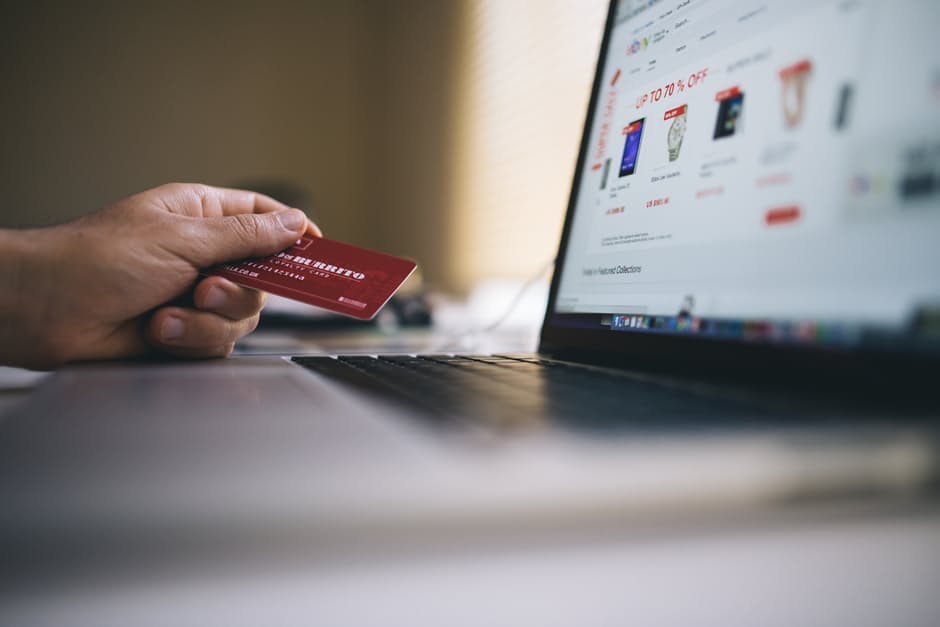
If you’re completing a one-time purchase on a website you don’t regularly use, try to avoid entering your credit card information. Most sites will support payment through PayPal, Visa Checkout or, if you have a Mac, Apple Pay. These are secure services that can complete your transaction without having to enter any of your sensitive information.

These services also make paying for items much faster. No need to fill out boxes of information. Just type in your password and you’re good to go. Who said you couldn’t have security and convenience at the same time?

4. Enroll in transaction alerts

Most banks will let you set up transaction alerts on any or all of your cards. Whenever a purchase is made with your card, you can receive an email, text or push notification telling you about it. This is a great feature to use if you let your family members use your card regularly.

All of these notifications might sound annoying, but it is the fastest way to verify that there aren’t any fraudulent purchases. If someone manages to get a hold if your card information and uses it, you’ll receive an alert. If you don’t recognize the transaction, you’ll be able to quickly flag it and inform your bank. Transaction alerts are by far the easiest way to keep tabs on your spending and security.

(adsbygoogle = window.adsbygoogle || []).push({});
string(3725) "

Online banking and shopping are part of everyone's lives now. Most consumers are completely comfortable entering their credit card information on any site. The vast majority of bank customers don't even receive paper statements anymore. But as with everything else online, there are some security concerns. Here are a few simple ways you can keep your financial information secure while you're shopping and banking online.


1. Use strong passwords

Especially for your bank account, use a very strong password. Having a complicated password will make it harder for anyone to hack or guess your login. You'll want it to be at least 10 characters long, have numbers, upper and lowercase letters and a few special symbols. You can make a pretty strong password that you can still easily remember.

Step your security up by signing up for password manager, like LastPass. These are secure, encrypted services that will generate strong passwords for all of your accounts. And by installing the browser extension, you can sign in with a click of a button.

2. Change your passwords regularly

Having a strong password is great, but it's still good practice to change your password at least once every year. If you haven't changed your password since you set up your account, you should probably go update it right now. As evidenced by Yahoo releasing information about a hack of accounts that took place years ago, changing your password regularly keeps your account secure. Those Yahoo users who changed their passwords after that hack took place in 2013 stopped hackers from maintaining access.

You should be changing your banking password regularly as well as any other accounts that are storing your financial information. This includes any shopping websites or payment services.

3. Avoid entering your credit card information

If you're completing a one-time purchase on a website you don't regularly use, try to avoid entering your credit card information. Most sites will support payment through PayPal, Visa Checkout or, if you have a Mac, Apple Pay. These are secure services that can complete your transaction without having to enter any of your sensitive information.

These services also make paying for items much faster. No need to fill out boxes of information. Just type in your password and you're good to go. Who said you couldn't have security and convenience at the same time?

4. Enroll in transaction alerts

Most banks will let you set up transaction alerts on any or all of your cards. Whenever a purchase is made with your card, you can receive an email, text or push notification telling you about it. This is a great feature to use if you let your family members use your card regularly.

All of these notifications might sound annoying, but it is the fastest way to verify that there aren't any fraudulent purchases. If someone manages to get a hold if your card information and uses it, you'll receive an alert. If you don't recognize the transaction, you'll be able to quickly flag it and inform your bank. Transaction alerts are by far the easiest way to keep tabs on your spending and security.

(adsbygoogle = window.adsbygoogle || []).push({});

"

The Ultimate Guide to Selling Funko POPs

Funko

Even if you don’t know the first thing about collectables, you know Funko POPs. Everyone does. They’re absolutely everywhere, from comic book shops to big box stores to movie theater concession stands. Many people think Funko POPs are cute, with their big black eyes and uniform features. Others think they’re creepy for pretty much the

What Is Beyoncé’s Net Worth?

Photo Credit: Instagram (Canva)

Now that she’s the fifth billionaire musician Update: August 18th 2026 Beyoncé remains a billionaire, with Forbes currently estimating her net worth at $1 billion. Since reaching billionaire status in late 2025, the superstar has continued expanding her business empire and musical legacy. In August 2026, Beyoncé became the sole owner of SirDavis after buying

The TRUTH About The Trad Wife Trend, Nara Smith, TikTok & More

Nara Smith, Lucky Blue Smith, and daughter Rumble Honey

Matthew Brookes / Oliver Peoples

Update: August 17th, 2026 TL;DR TikTok’s favourite tradwife has already welcomed her fourth child, settled into a new home, and continues to fuel the Internet’s debate around curated domesticity. Here’s what’s new with Nara Smith, why the “tradwife” trend is still evolving, and what it says about the appeal of traditional homemaking online in 2026.

Is Financial Infidelity Worse Than Regular Ol’ Cheating?

Photo by StockSnap for Pexels

Mention the word “infidelity” and the usual images are conjured up:  secret encounters in sordid motels, callers who hang up when the wrong person answers the phone, tears and harsh words when the truth comes out. A less dramatic (but increasingly common) form of betrayal is making waves: financial infidelity. What is financial infidelity? Financial

The Motherhood Penalty

Photo by Sai De Silva (Unsplash)

You Lose $20K Each Year Just For Being a Mom You may not know this, but there was a time when smoking was considered “liberated” behavior for women. There was a cigarette company Virginia Slims that was created specifically to attract female smokers during the bad old 1970s. The slogan was “You’ve come a long

Financial Red Flags To Watch Out For When Dating

Photo by Niko_Shogol for Pixabay

TL;DR: One of the biggest money red flags in dating? When your partner simply won’t talk about money. According to financial therapist Erika Wasserman, that’s the #1 issue to nail down if you want to know whether your potential future partner and your financial IQs are compatible. Why “Not Talking Money” Is More Than Awkward