Tipflation Takes Over

Feb 19 | 2024
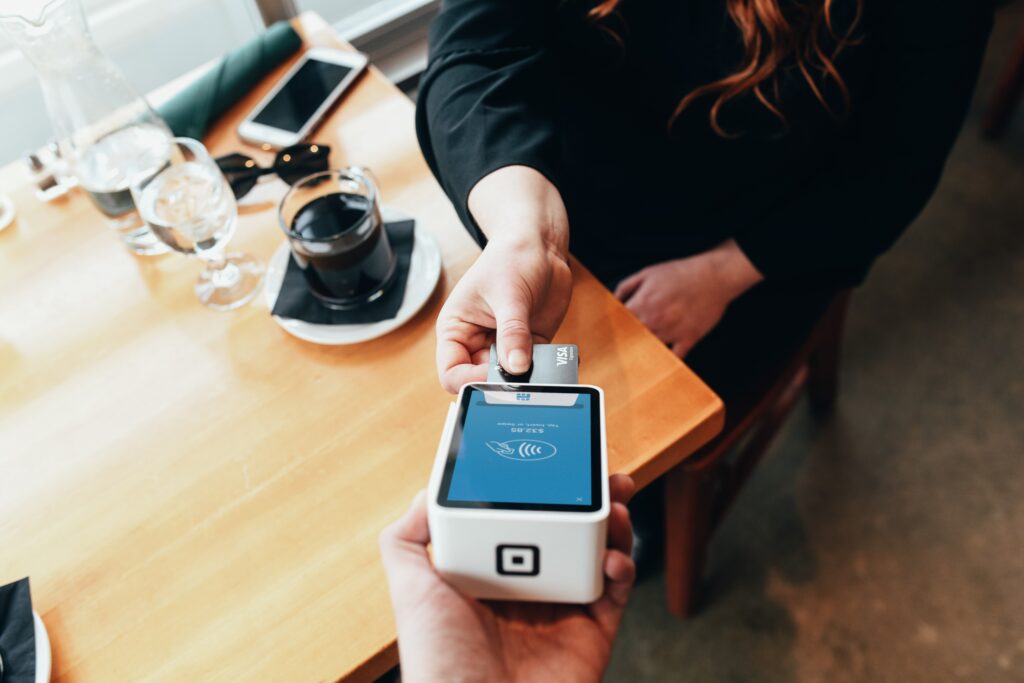
Digitized payment methods have led to more aggressive tipping culture...here's how.
Blake Wisz via Unsplash
A few years ago I was at Coachella, buying overpriced, under-seasoned food from a vendor who was particularly kind. Par for the course, all of these events are dominated by Square payments that provide the oh-so-convenient option to tip your gracious server. Oftentimes, the transaction is so quick, you’re wondering if you should even tip at all.
But in this case, I wanted to tip her. Since there wasn’t a homemade, pun-emblazoned tip jar present (most of these events are cashless), I hovered my finger over the 15%, 20%, and even 25% options before she stopped me. She informed me that she didn’t receive any of the money from those tips — they just gave the vendor more money.
While I can’t prove this is the case everywhere, or even if she truly knew this as fact, it was enough for me to be wary. I mean, why is there the option to tip the person who is simply giving you merch at concerts? I don’t normally tip the cashier at the mall…
Nonetheless, you feel like an awful person for not tipping when you’re prompted. The cashier is standing right in front of you, watching you sweat. And the person behind you in line is probably judging you, too. You so badly want to select the “Other” option and punch in a quick, cheaper tip…but what would this total stranger think?
Our culture is so accustomed to tipping that I went to the nail salon to get my eyebrows waxed through ClassPass — a monthly subscription where I can book wellness classes of any sort. Since I ‘d technically prepaid, I decided to leave my wallet behind. Big mistake.
The woman at the counter refused to let me leave the establishment until I tipped, even though I insisted that I didn’t have my wallet on me. I had to go home and come back, saturated in embarrassment. While tipping is a way that most servers and stylists make a good amount of cash, my $2 tip on my $10 eyebrow wax is not worth my public humiliation.
Believe me, I’m all for tipping your drivers and servers, but there are times when you wonder: how much is too much? And, when the Square is flipped my way, why are the tip options so outrageous?
Recently at a Brooklyn Mirage event, where two double-vodka sodas cost $100, I noticed that not only were the drinks criminally expensive, but the tipping options were designed to take advantage of drunk people.
When you’ve had a few drinks, it’s easier to just click buttons and spend money. You’re not thinking straight, and neither is your bank account. After a few espresso martinis, I believe I’m Oprah! I get a drink, you get a drink, you get a drink, and even you, person I just met, get. A. Drink!
But that doesn’t mean you need to tip an egregious amount each time you order a drink when you go to a show or the stadium — even if they’re trying to make you think you should.
It’s Called Tipflation.

Sam Dan Truong via Unsplash
Back in August, Forbes showed us the following facts: “A recent survey by Bankrate found that roughly 66% of Americans have a negative view of tipping. Around 30% of respondents think that tipping culture is “out of control,” with more companies encouraging customers to tip at their counters than ever before. Patrons find the pre-entered tip screens aggravating (32%) and think businesses should pay their employees more rather than rely on gratuity (41%).”
The digitized payment method can be tricky. Your tip options can exceed 30%, with no option to give a custom tip. 75% of remote food and beverage transactions are now accompanied by encouragements to tip.
Forbes says it’s partially due to the pandemic, where we started tipping more simply to show support for restaurants and their workers for staying open. However, when the pandemic ended and everywhere re-opened, that tipflation stayed.
With the rise of the Square digital payment method, we are forced to think about tipping for counter service. If you think back, before the pandemic, we were still a 15-20% tipping culture for those providing us a service. But now, it’s more than that.
Do we tip our bartenders 20% for every single drink? Do we tip the girl who hands us our coffee every time? What is the correct way to tip?

If you’re happy with the service, give them a tip! It’s still customary to tip your server and the person who did your hair or your nails — basically, anyone who provided you with some sort of service. But it gets trickier when you’re at an event with all digitized payment methods.
You don’t need to tip the people at stadiums every single time, or when you’re at a festival. If you do feel obligated to tip, give what you can. You don’t need to choose the options provided, just look for “Other” or use cash.
Again, tipping is a way of showing gratitude for the service provided. If you are extremely unhappy with your service, you don’t have to tip. Whatever you’re able to give will be appreciated.
Blake Wisz via Unsplash